Skip to content
Laser cutting & bending
Unique3D
Aluminium · 1 to 3 mm

Aluminium sheet laser cutting

Aluminium is about one third the weight of steel and does not rust. That makes it the sheet for enclosures, front panels, drone and robot frames and anything that has to be carried or moved. For aluminium laser cutting, upload a DXF or SVG on the quote page and the price appears at once.

From ₹36 a piece, inclusive of all taxes. Prices for a front panel

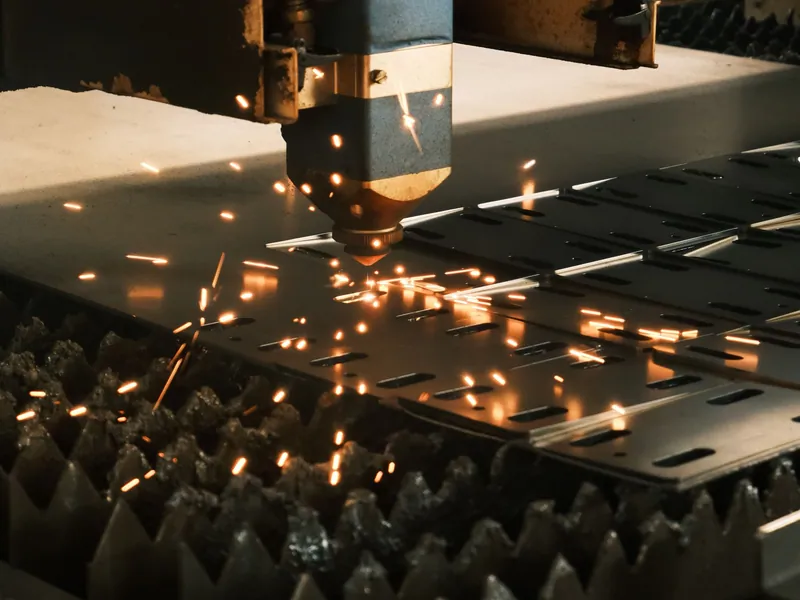
A fibre laser cutting rows of slots in a steel sheet, sparks flying from the cut
A fibre laser cutting sheet metal. Aluminium is cut on the same kind of machine.
Thickness
1 to 3 mm
Grade
5052-H32 or equivalent sheet grade
Largest piece online
1000 × 600 mm
Dispatch
4 to 6 working days

Aluminium sheet cutting is done on a fibre laser with nitrogen, which leaves a clean edge. A person checks every drawing before it is cut. The flat parts are cut in Bengaluru and couriered anywhere in India.

The sheet we cut: 5052-H32 or equivalent

The sheet is 5052-H32 or an equivalent sheet grade. 5052 is an aluminium-magnesium alloy. It resists corrosion well, bends well and can be welded, which is why it is a standard choice for sheet metal work.

It is a sheet alloy made for forming, not a plate alloy like 6061-T6 that is chosen for machining. If your design calls for a specific alloy or temper, send a custom request and say which one.

Aluminium weighs 2.7 g per cubic cm, so a square metre of 1 mm sheet is about 2.7 kg. The same sheet in steel is about 7.85 kg.

How the laser cuts aluminium and what the edge looks like

Aluminium reflects laser light and carries heat away quickly, so it is harder to cut than steel of the same thickness. This is why the thickness range on this page stops earlier than it does for steel.

We cut it with nitrogen as the assist gas. The edge is clean, with a slightly matt, finely lined look. Thicker sheet carries a light burr on the underside, which comes off with a file or a deburring tool.

Typical tolerance is about ±0.2 mm, and the kerf is about 0.1 to 0.3 mm.

Designing aluminium parts

Keep holes and slots at least as wide as the sheet is thick. Leave at least one sheet thickness between neighbouring cuts, and between a hole and the edge. Very small pieces can fall through the cutting bed, so we leave them on a small tab that you snap off.

Aluminium is about one third as stiff as steel. A panel that is stiff enough in 1.5 mm steel will flex in 1.5 mm aluminium. Go up in thickness, or add folds and flanges if you are bending the part yourself. Even after going thicker, the aluminium part is usually much lighter than the steel one.

Threads cut straight into thin aluminium strip easily. For screws that will be opened often, plan for rivet nuts, press-in inserts or a nut behind the panel. Tapping is not part of the instant quote.

After cutting: deburr, anodise, powder coat, bend, weld

You receive flat cut parts in the mill finish. Aluminium is soft, so it scratches more easily than steel, and the edges are sharp until you deburr them.

Aluminium needs no coating to stop rust. Outdoors it slowly turns dull grey, so parts that must look good are usually anodised or powder coated. Both finishes take well on laser-cut parts once they are deburred and cleaned.

Sheet grades like 5052 bend well. Welding is possible with TIG or MIG but needs more skill than steel. Where aluminium touches steel in a damp place, isolate the joint with paint, a gasket or plastic washers to avoid galvanic corrosion.

  • Bending up to 3 mm is on the quote page. Not part of the instant quote: welding, tapping, countersinking, anodising and powder coating
  • If you need any of these, send a custom request

When to choose aluminium

Choose aluminium when weight matters: drones, robots, vehicle panels, portable equipment and anything mounted on a wall or a moving arm. It is also the pick for heat spreaders, because it conducts heat well.

Per kg, aluminium sheet costs more than mild steel, but a part needs far fewer kg. If the part is heavily loaded, takes wear or will be welded into a steel frame, mild steel is the simpler choice. If you need a hard, bright surface that never needs coating, look at stainless steel 304.

Aluminium laser cutting price

Exact prices from the quote engine for a front panel (300 × 200 mm panel with a 92 × 45 mm display cut-out, four 22 mm switch holes and four 4 mm fixing holes), in every thickness we list. Your own part will differ with its size and the amount of cutting: upload the drawing for its price.

Aluminium laser cutting price for a front panel (300 × 200 mm panel with a 92 × 45 mm display cut-out, four 22 mm switch holes and four 4 mm fixing holes). Prices are per piece in rupees, inclusive of all taxes; delivery is extra and depends on weight and pincode.
ThicknessWeight each1 piece10 pieces, each100 pieces, each
Aluminium 1 mm147 g₹377₹268.70₹257.85Quote
Aluminium 1.5 mm220 g₹461₹353.20₹342.33Quote

How quantity changes the price

The same front panel in 3 mm aluminium. The setup for a drawing is charged once, so the price of each piece falls as you order more.

Compare with other sheets on the laser cutting price page.

Price per piece by quantity for a front panel (300 × 200 mm) in aluminium 3 mm. Prices are per piece in rupees, inclusive of all taxes; delivery is extra and depends on weight and pincode.
QuantityPrice eachOrder totalSaving per piece
1 piece₹773₹773—
5 pieces₹677₹3,38512%
10 pieces₹665₹6,65014%
25 pieces₹657.84₹16,44615%
50 pieces₹655.42₹32,77115%

Designing for aluminium

  • Keep every hole and slot at least as wide as the sheet is thick.
  • Go up in thickness from your steel design, because aluminium flexes more.
  • Plan rivet nuts or inserts for screws, since threads in thin aluminium strip easily.
  • Leave at least one sheet thickness between a hole and the edge.
  • Add a small radius to inside corners to reduce stress there.
  • If you will bend the part yourself, keep holes a few sheet thicknesses away from the bend line.
  • Isolate aluminium from steel frames and fasteners in damp places to avoid galvanic corrosion.
  • Convert front-panel text to outlines, and remember that it will be cut through, not engraved.

The full list, with the reasons: design rules for laser-cut parts.

Aluminium laser cutting: questions

How thick can you laser cut aluminium sheet?

The instant quote covers aluminium in the thicknesses listed on this page. Aluminium reflects the laser and conducts heat away quickly, so the range stops at a thinner sheet than steel. For anything thicker, send a custom request.

Does laser-cut aluminium have burrs?

Thin sheet comes out clean. Thicker sheet carries a light burr on the underside, which is normal for aluminium and comes off with a file, a deburring tool or fine emery paper. The edges are sharp either way, so handle the parts with gloves.

Which aluminium grade do you cut, and can I get 6061?

The stocked sheet is 5052-H32 or an equivalent sheet grade, which bends well and resists corrosion. 6061 and other alloys are not on the instant quote. If you need a specific alloy or temper, send a custom request.

Can laser-cut aluminium parts be anodised or powder coated?

Yes, laser-cut aluminium takes both finishes well. Deburr and clean the parts first, because any burr shows through the coating. Anodising and powder coating are not offered on the instant quote, so send a custom request if you need finished parts.

Can an aluminium bracket replace a steel one?

Often yes, if you go thicker. Aluminium is about one third the weight of steel but also about one third as stiff, so the same thickness bends more under load. Go up in thickness or add a fold, and check highly loaded parts with a proper calculation.

Can I order just one aluminium front panel?

Yes. There is no minimum quantity, only a small minimum order value. The price per piece falls as you order more, because the setup is shared across the pieces.

Cut your part in aluminium

Upload your DXF or SVG for an instant price, inclusive of all taxes. A person checks every drawing, and we ship across India.

Chat with us